
notes on mainstream TV hell
15 years ago
THE MONKS are like The Velvet Underground of the garage-rock scene – few bought their sole album, Black Monk Time, on its release in 1966, but the group have since become an influential rock’n’roll cult. American GIs stationed in Germany, the Monks infamously shaved their crowns and wore only black onstage, but it was the primal invention and off-kilter psychotic quality of their music, echoing the violence of Vietnam and the tumult of the 1960s, that ultimately won them subterranean fame.
Tonight, four decades after they split, they played their first-ever
Their songs remained as gloriously, electrifyingly odd as before, from incessantly catchy rave-ups like ‘Oh, How To Do Now’ to an unhinged ‘Shut Up’, its call-and-response chorus chanted by an audience young enough to be the Monks’ children, who discovered the group via namechecks from fans like Jack White. Moved by the response, frontman Gary Burger promised a return to these shores next year. An official documentary, The Transatlantic Feedback, is set for release next year, but tonight proved The Monks are no mere museum pieces. No, they’re still crazy, after all these years, and long may they rage.
(c) 2007 Stevie Chick
He was, and perhaps still is, the hardest working saxophonist in showbusiness, blowing horn and evading fines with James Brown over several stretches through the 60s, 70s and 80s. Maceo Parker lent his furious bebop bleat to Brown’s 1973 studio masterpiece, The Payback, and played on his epochal 1968 single ‘Say It Loud (I’m Black And Proud)’. Say It Live And Loud, a highpoint amid Brown’s blizzard of live albums (taped the night after Brown recorded his black power anthem, but unreleased until 1998) is as blistering evidence as you could wish for of Parker’s crucial place within Brown’s onstage sound, while anyone au fait with 1980s Hip-Hop will be familiar with the sound of Maceo’s horn, turned inside-out thanks to nefarious manipulation by the Bomb Squad, squealing like the devil’s own siren throughout Public Enemy’s ‘Rebel Without A Pause’.
Stepping off the JBs train, he led his own group, before hooking up with George Clinton to usher in the high times of disco-era Parliament. In the 1990s, he graced De La Soul with his presence for their Buhloone Mindstate album, signed up with another mercurial funk genius blowing for Prince’s New Power Generation, and guested with Jane’s Addiction and the Chili Peppers. Today, he’s promoting his latest album Roots & Grooves, a double set featuring a brace of hard-funk licks sharp enough to belie his 64 years, and an album’s worth of Ray Charles covers backed by an 18-piece Big Band from
Covering Charles’ songs is for Maceo very much a tribute to his roots, growing up in
His mother had, he says, “a great voice. She could have been a star, but she chose singing religious music over nightclubs. I was telling her on the telephone today, that she could’ve been Ella Fitzgerald if she’d wanted to be; she’s 80-something now, but she still has a great voice.” Both parents attempted to learn the piano but quickly dropped it; the instrument remained in the Parker house, however, and so-inclined visitors would often tinkle the ivories, with Maceo gazing on in rapt concentration. “I’d watch their fingers,” he says, “really watch them. I musta been six or seven years old, but I’d remember the fingering, where the chords were. And when the grown person would get up and start talking to ma, I’d go and start playing the song. I didn’t know how to play the piano, but I was playing the piano!”
Parker describes his time with James Brown as being “like a train ride. You get onboard, and once it’s taken you as far as you want to go, you get off.” Maceo had plenty of preparation for his first embarkation, having formed a group with his brothers Melvin and Kellis when he was eleven. “My uncle had a group, the Blue Notes, and we tried to play everything they played. We tried and tried and tried, and eventually we got to a point where we could play three or four of my uncle’s tunes, and people could recognise what they were! We called ourselves the Junior Blue Notes, and began playing around town, and people we’d never met before started saying, ‘Wow! You can really play!’ That’s when we knew something was happening.”
The Godfather of Soul caught one of the group’s performances some years later, and was particularly impressed with the drummer, Melvin, offering him a place in his group. A year later, Melvin was drumming for Brown, having also secured a slot for 21-year old Maceo, for whom the opportunity offered the chance to fulfil a long-held dream. “I’d always wondered, what would it be like to walk into a bar somewhere you’ve never been before, throw a quarter into a jukebox, and hear yourself play? I knew that, playing with James Brown, we’d get to record in a studio. By the time it finally happened, it wasn’t the thrill I thought it was gonna be,” he laughs, of his jukebox fantasy, “but I was a little more grown by then, and my dreams had evolved to playing stages all over the world.”
This was another dream playing with Brown would facilitate, but the Godfather was an exacting boss. “All the stories you’ve heard are true,” Maceo chuckles, “but it’s all to make you better, to make the group better. James preached discipline, decorum, taking pride in how you dress, trying not to perform in uniforms that look like you just slept in them, just being proud of who you are and holding your head up high. Again, you’re aboard the train, and it’s taking you where you need to go, you have to trust in the driver. That’s how I viewed working with James: anyway he wants to do a thing, that’s how I’ll do it.”
A year after joining Brown in 1964, Maceo was drafted into the military, returning afterwards for another three year stint, during which the Godfather was greatly accelerating the evolution of this thing we call funk. Shortly after recording a feverish homecoming date in Atlanta, GA in 1969 (which the Godfather intended to release as James Brown At Home With His Bad Self), however, Maceo exited Brown’s employ, accompanied by the rest of the group.
“We had grievances, it was time to tell the conductor to stop the train,” remembers Maceo. “The other guys got wind that I wanted to leave, and suggested we all approach James en masse, and threaten to quit. And James didn’t like that, it was too much power for him; later on, in his book, he said he fired me, but he didn’t. I’d not wanted the rest of the band to quit, though; I wanted to look James in the eye and let him know I had enough, uh, whatever, to quit on my own.”
Brown didn’t look far for replacements, hiring a couple of young kids, Bootsy and Catfish Collins, who were always hanging around his recording studio in Cincinnati as the backbone of his new backing group, The J.B.s. The transition was signalled with 1970’s Sex Machine album, where a J.B.s-era late night session, which yielded the hugely-successful titular track, was cobbled together with the 1969 Atlanta show as a live album, with canned studio noise covering the cracks. The J.B.s would not last long, however. “Bootsy and Catfish had joined, thinking they’d get to play with us,” laughs Maceo. “Then when they arrived, and discovered us gone, they started to wonder what had made us quit. And then they found out…”
Maceo, meanwhile, had gone on to form a new band with his old colleagues, Maceo And All The King’s Men, their moniker perhaps a jab at their erstwhile King Of Soul employer. “We had fun,” Maceo remembers. “Some nights we wouldn’t make more than $80 between all of us, but that was just enough gas money to get us to the next show. We were young, we had no responsibilities, what did it matter?”
Parker would return to the Godfather’s employ during the 1970s, leaving again to work with George Clinton, as Musical Director for Parliament. Though
“And that was his concept; they’re from outer space, and they’ve been assigned to come down from their galaxy to show the people of Earth what funky music is really about. We had a tune called ‘Atomic Dog’, and George would tell the audience, I gotta find me a dog! He’d walk around the stage, and pluck a girl from the audience, throw her down and walk her like a dog…”
Did you find this hard to adjust to?
“No. It took a minute to adjust... There were some real funky players in that group, like Eddie Hazel. He was funky, and funky is funky. [mimics funk guitar] And you appreciate it when you hear it.”
In the years that followed, Maceo returned to the Godfather’s bosom a couple more times, fielded offers for high-profile collaborations, pursued several solo projects, and has been blowing horn for Prince since 1999’s Rave Un2 The Joy Fantastic. And he finally got his chance to play with the Collins brothers, as a member of Bootsy’s Rubber Band, throughout the 70s and 80s.
“Bootsy had a little of James’s uniformity, but also a little bit of the George Clinton thing too,” says Maceo. “We didn’t get as raunchy or vulgar as George, but he’d hint on a little something every now and again. And, like George, he loved flashy clothes, in particular anything that was red and white. Nobody else can play like those two, I’m sorry. [mimics interplay of the Collins brothers] It’s nice.”
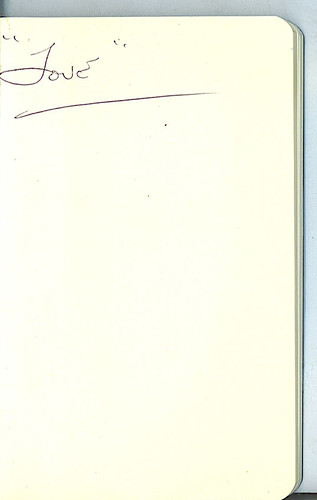
At the end of the interview, Maceo asks if he can borrow my notepad and pen and, on the next available blank sheet, scribbles a word in a neat scrawl near the centre of the page. He then pushes the notepad back across the table.
“I just want you to know, everything I do… Everything…” He draws his hands up to his chest, which rises slowly as he takes a deep breath, filling lungs that have blown like the proverbial hurricane through the histories of funk, soul and pop – a gesture which unconsciously reminds just how grand an ‘everything’ that really is. “…is because of this.”
The word is “love”.
(c) Stevie Chick, 2007September 12th saw Brian Wilson return to the freshly-refurbished Royal Festival Hall – where he had previously debuted Smile and Pet Sounds – for the world premiere of his newest work, a song-cycle written with Wondermint Scott Bennett and long-time collaborator Van Dyke Parks. Entitled That Lucky Old Sun (A Narrative), conceived while Wilson was “in the middle of a real creative trip”, it is a musical tribute to Southern California, a location enshrined in so many Beach Boys songs.
In typically excitable, enthusiastic mood, dressed in a black and white striped top and accompanied by his ten-piece band and the Stockholm Strings And Horns, Wilson treated his audience to a joyous opening set of Beach Boys favourites from ‘Surfer Girl’ to ‘Heroes And Villains’, slipping in a snippet of ‘That Lucky Old Sun’ as a tease; that the audience were clapping along by the fifth bar was an encouraging sign.
Following a twenty minute interval, Wilson and his musicians returned to perform the nine songs of That Lucky Old Sun, with periodic interjections from Van Dyke Parks’ dippy, loving, poetic narration, accompanied by projected animations. Brian’s most ambitious new work since returning from the wilderness, the song cycle recalls Pet Sounds and Smile, not least in its playfully baroque arrangements – a playground riot of glockenspiel, tympani, strings and harmonies all played with a smile – and melodic nods to the Beach Boy canon, complementing the autobiographical bent of the lyric-book.
That Lucky Old Sun revisits familiar
‘
(c) 2007 Stevie Chick